
Cebu
City in the Philippines
Cebu is a province of the Philippines, in the country’s Central Visayas region, comprising Cebu Island and more than 150 smaller surrounding islands and islets. Its prosperous port capital, Cebu City, retains landmarks from its 16th-century Spanish colonial past, including the Basilica Minore del Santo Niño church and triangular Fort San Pedro. Tops, an observation deck on Mt. Busay, has sweeping views over the city.
Cebu City is also a gateway to the region’s renowned dive sites and beach resorts. Throughout the province, divers and snorkelers can see whale sharks, turtles, hammerheads and rays among coral reefs, caves and steep walls. The west-coast town of Moalboal has several dive sites, modern resorts, nightlife in Panagsama and the sandy White Beach. Off the north coast of Cebu, tiny Malapascua Island has laid-back beaches and simple resorts, with renowned diving among thresher sharks offshore. Northwestern Bantayan Island focuses on beach life, centered around the village of Santa Fe.
THINGS TO DO:
 Magellan’s Cross
Magellan’s Cross is a Christian cross planted by Portuguese and Spanish explorers as ordered by Ferdinand Magellan upon arriving in Cebu in the Philippines on 16( American Date)17 March 1521.
 Sirao Peak
Mount Sibugay or Sirao Peak is one of the known destinations to trekkers nowadays. Sirao Peak stands at around 600 MASL that is located at Barangay Sibugay, Cebu City. It is located next to Ayala Heights. Sirao Peak is famous for trekkers as it is one of the most accessible mountains within the city. It has that picturesque green meadow panoramic scene below when you’re at its peak. Everyone couldn’t want more but to experience the serene beauty of the place surrounding it with an almost 360 view at its peak
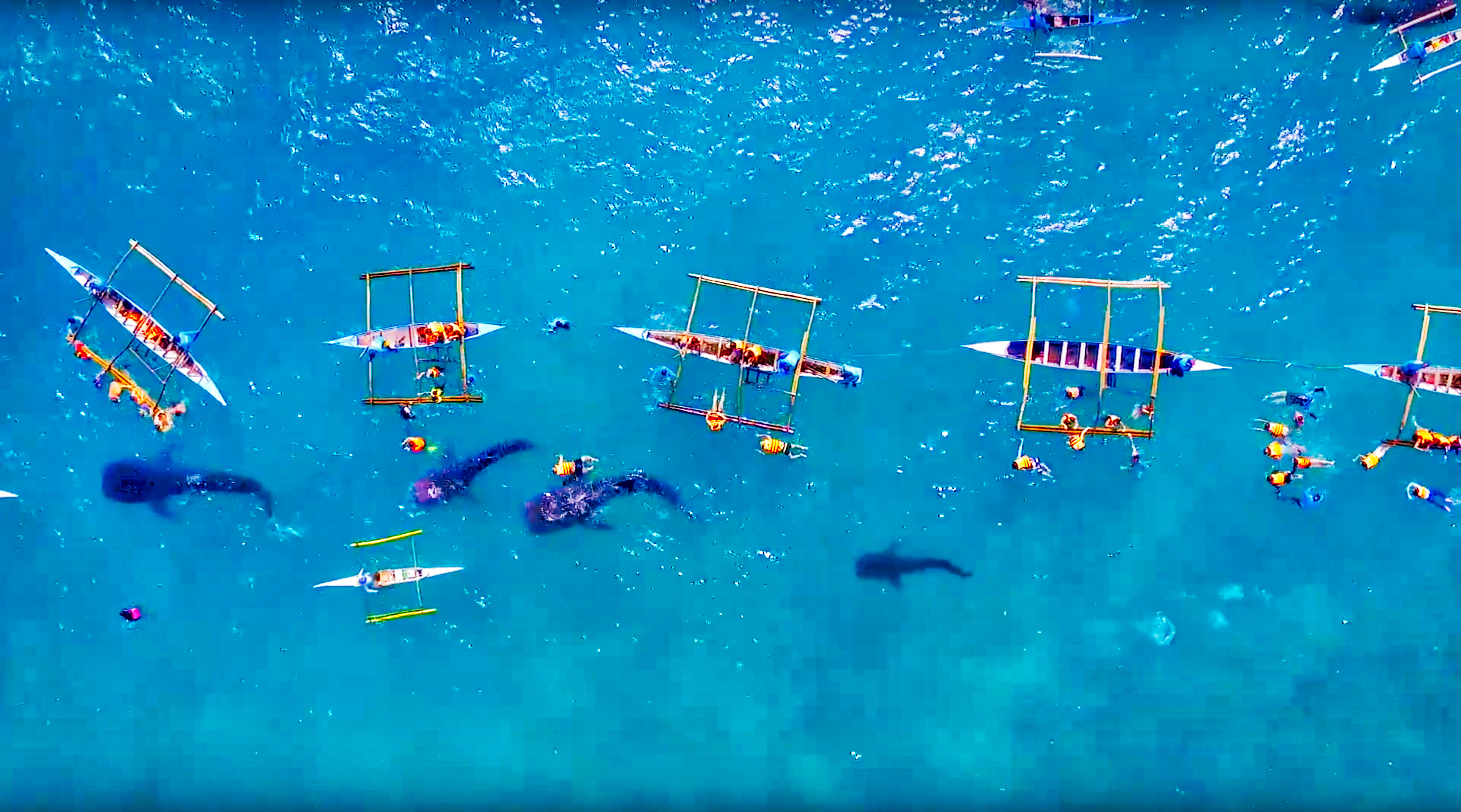 Oslob
Oslob
Oslob, officially the Municipality of Oslob, is a 4th class municipality in the province of Cebu, Philippines. According to the 2015 census, it has a population of 27,893 people. Oslob is bordered to the north by the town of Boljoon, to the west are the towns of Ginatilan And Samboan, to the east is the Cebu Strait, and to the south is the town of Santander.
 University of San Carlos Museum
The University of San Carlos Museum has been operating as early as 1952 but it was only in April 23, 1967 that inauguration rites for the museum was conducted which was graced by Verbite priest and then University of San Carlos President, Rudolf Rahmann and then First Lady Imelda Marcos. In 1967, the museum then occupied just two classrooms and another room. By 2017, it was occupying the ground floor wings of the Arthur Dingman Building along P. Del Rosario Street at USC’s Downtown Campus.
WHEN TO VISIT
Dec–Jun can be a popular time to visit Cebu’s many beaches and dive sites. The climate is warm and humid year-round, with a rainy season Jun–Nov. Typhoons are most likely Oct–Dec. Sinulog (Jan) features Christian processions, traditional dance and colorful parades in honor of a relic brought to the Philippines by Portuguese explorer Ferdinand Magellan. Christian holidays including Holy Week and Easter (dates vary, Mar/Apr) and Christmas (Dec) are also widely celebrated.


 solivagant.video.blog